GALLSTONES
The gallbladder is a pouch the size of a lime that sits under the liver and stores bile. Bile is a dark green liquid composed of water, bile salts, and cholesterol that helps with digestion of food and absorption of fat and fat-soluble nutrients and vitamins. The liver continuously makes bile, which is then stored in the gallbladder and released when a meal is ingested. Sometimes, the cholesterol in- bile can deposit and form thick crystals or stones.
They vary in size and shape from as small as a grain of sand to as large as a golf ball. In developed countries, gallstones occur in 7% of males and 15% of females aged 1865 years. In individuals under 40 years there is a 3:1 female preponderance. Women during their fertile years are almost twice as likely as men to experience gallstones. Increased levels of the hormone estrogen, as a result of pregnancy or hormone therapy, or the use of combined forms of hormonal contraception, may increase cholesterol levels in bile and also decrease gallbladder movement, resulting in gallstone formation. Rates of gallstones are two to three times higher among women than men. Risk factors include obesity, diabetes, high biliary protein and lipid concentrations , female gender, pregnancy. There are three types of gallstones – pure cholesterol stones – 90%cholesterol pigment stones – brown or black- 90% bilirubin mixed composition stones, which contain varying proportions of cholesterol, bilirubin and other substances such as calcium carbonate, calcium phosphate and calcium palmitate.
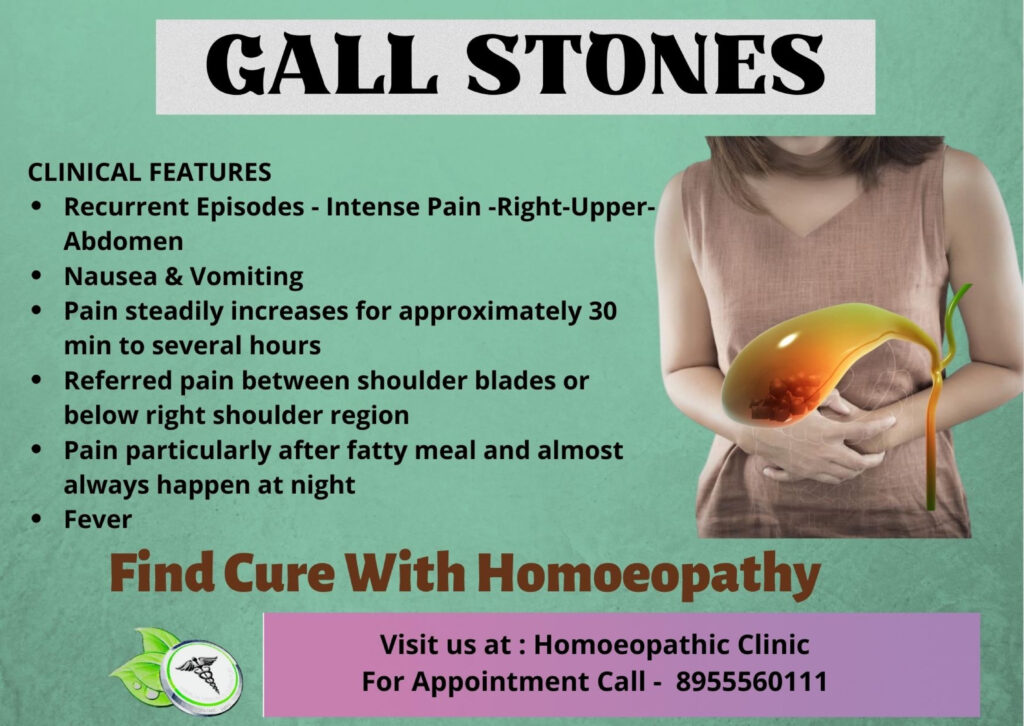
Gallstones may be present in the gallbladder for decades without causing symptoms or complications. When symptoms however appear they are really disturbing. Pain termed biliary colic occurs when gallstones or sludge obstructs cystic duct during gallbladder contraction, increasing gallbladder wall tension. These pain episodes are unpredictable and unbearable. Pain in epigastrium or right upper quadrant with radiation to right scapular tip . Pain begins usually within an hour after a fatty meal, may last from 1-5 hours. From the onset may be accompanied by nausea, and vomiting, indigestion, dyspepsia, belching, bloating, and fat intolerance. The most common complications of gallstone disease are inflammation of the gallbladder, bile duct or pancreas, gangrenous gallbladder. Obstruction of bile duct that leads to jaundice, small bowel obstruction. Very large gallstones may increase risk of gallbladder cancer and bile duct cancer.
Homoeopathy is a system of therapeutics which treats the patient as a whole having individualised approach & treatment is based on the totality of symptoms it aims at rapid, gentle and permanent restoration of health. Clarity of the symptoms facilitates easy selection of accurate medicine.
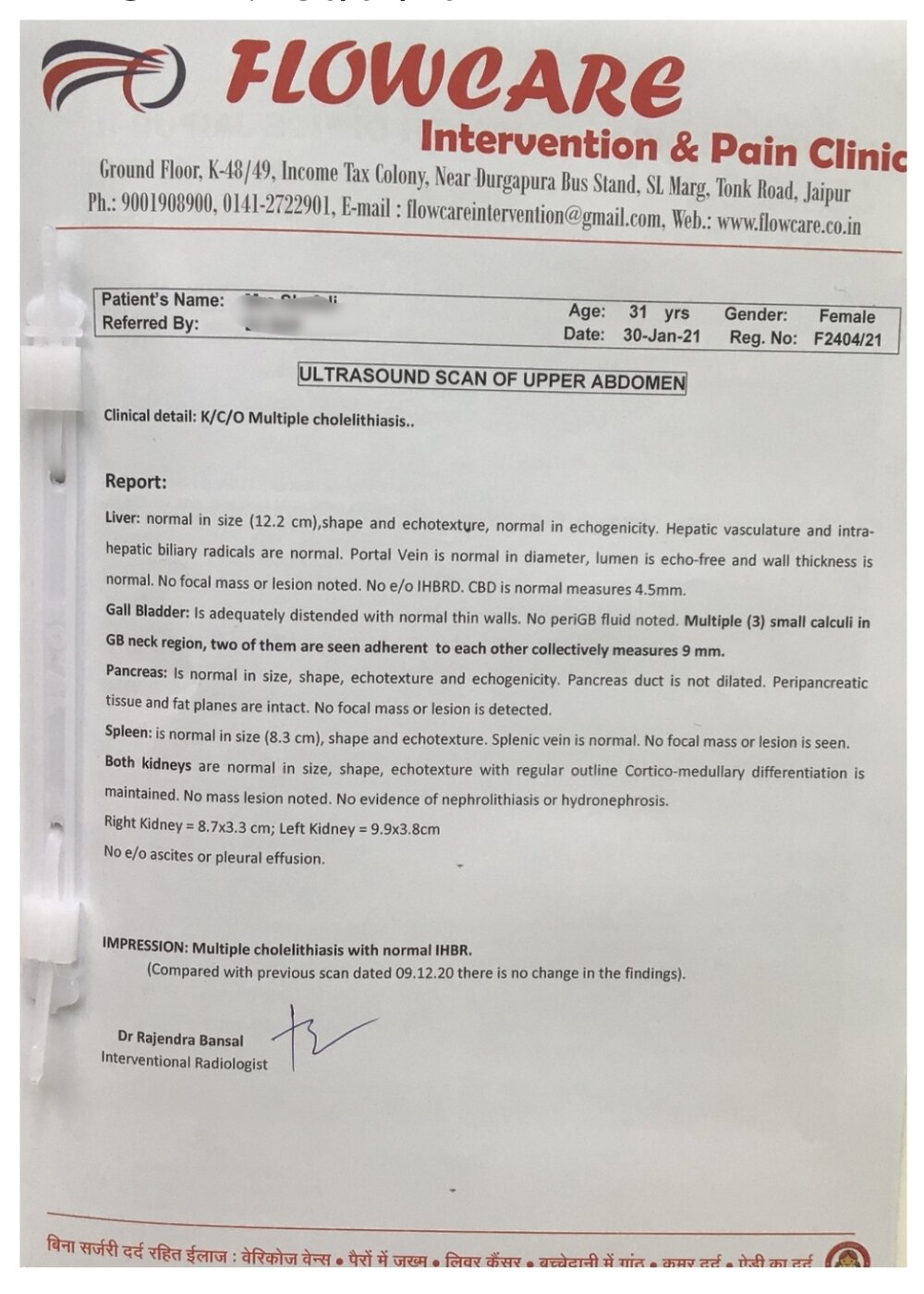
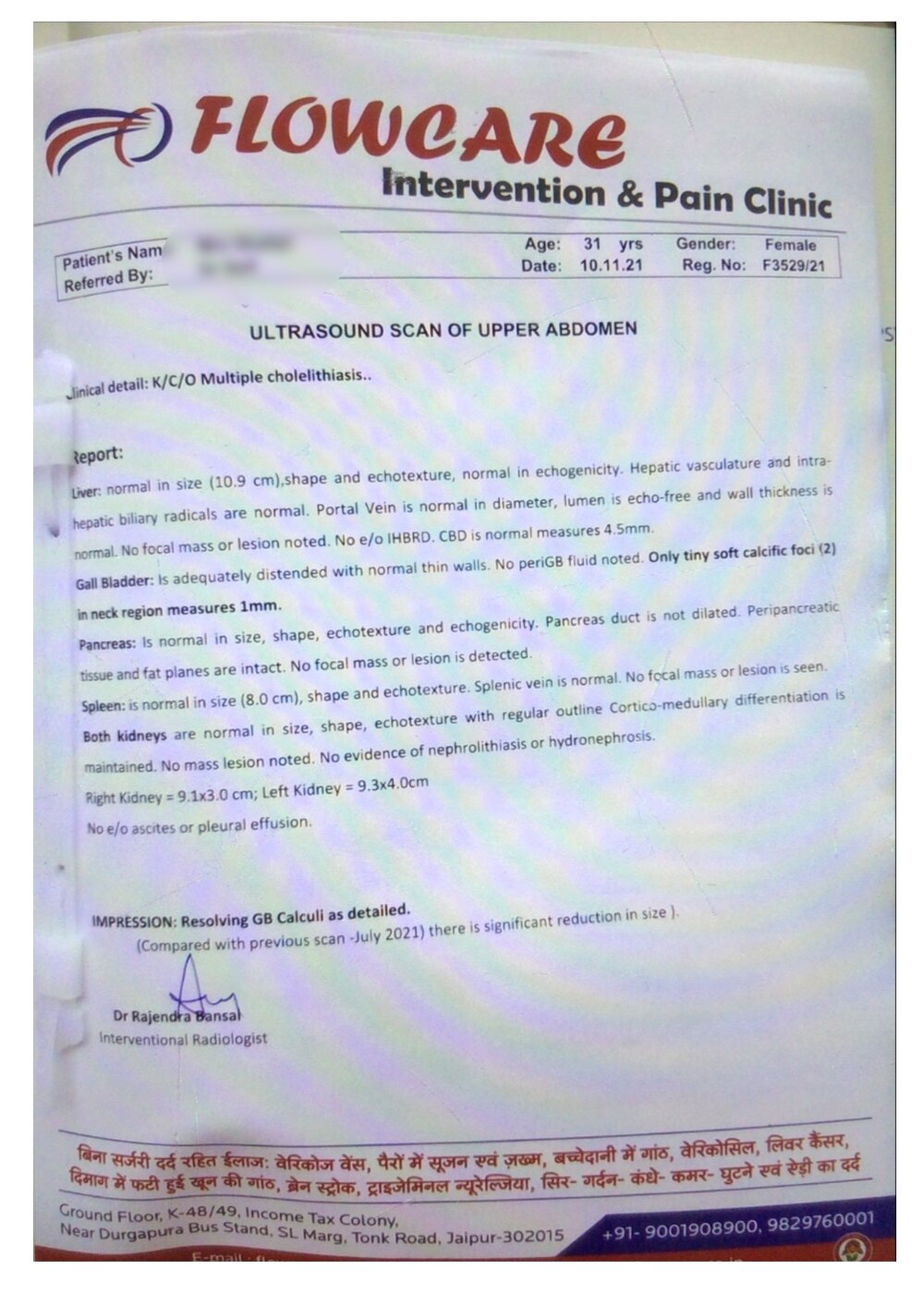
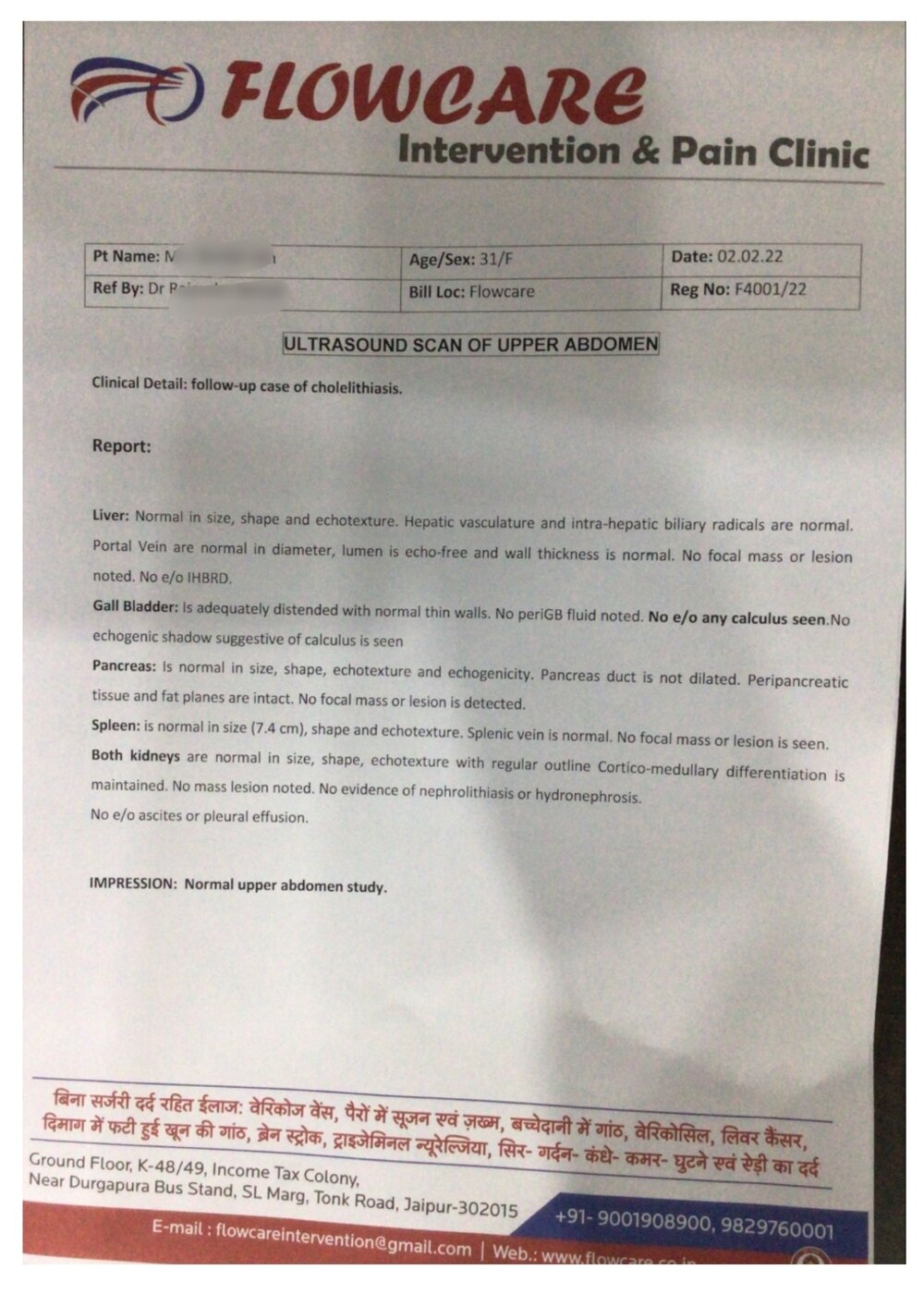
Homoeopathy is effective in the treatment of gall stone disease. Disappearance of signs and symptoms within a short span of time along with USG evidence of absence of stone demonstrates positive effect of homoeopathy in the treatment of gall stone. Surgical intervention can be avoided through proper homoeopathic treatment which saves patient from the risks and post-operative complications.